Quotation Mark: Web Elements & Graphics for Expressive Branding
First Impressions: Warm, Human, and Intentionally Imperfect
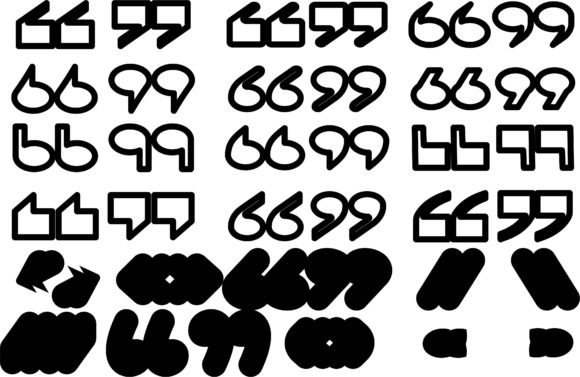
Opening Quotation Mark for the first time felt like unboxing a well-curated design toolkit—not sterile or generic, but full of personality. These aren’t clinical typographic symbols; they’re expressive, hand-touched quotation marks with subtle weight shifts, organic curves, and thoughtful spacing. Some lean gently, others anchor with quiet confidence. The mood is approachable yet intentional—ideal for a handmade business launching its first product line, a boutique café rebranding its social media visuals, or an indie publisher designing quote-based Instagram carousels. It leans into modern design without sacrificing warmth, making it instantly compatible with brands that value authenticity over austerity.
A Real Project Fit: Elevating a Local Artisan’s Seasonal Campaign
I recently scoped Quotation Mark for a client—a small-batch ceramicist preparing a fall collection launch. Her messaging centers on storytelling: “Each piece holds a memory,” “Clay remembers your hands,” “Made slow, meant to stay.” Quotation Mark didn’t just *fit*—it elevated. Used as hero graphics behind handwritten quotes on Instagram posts, it added visual rhythm without competing. As subtle framing elements on product labels and packaging design, it reinforced craft and care. And in her Canva template library for email headers and blog visuals, it became a consistent, recognizable brand accent—never overwhelming, always cohesive.
Where It Shines in Client Work
- Product mockups: Layered over neutral backgrounds, Quotation Mark adds dimension and narrative context—especially effective for Etsy product listings and print-on-demand previews.
- Social media graphics: Works beautifully in Pinterest pins and Instagram quote posts where emotional resonance matters more than rigid geometry.
- Printable design & wall art: With 284 SVG files and 284 PNG files at 300dpi, scaling is flawless—from A4 printable quote cards to large-format gallery prints.
- Cricut project & sublimation design: Vector files (SVG, EPS, AI) retain crisp edges at any size, ideal for vinyl decals, mugs, tote bags, and t-shirt design.
- Editorial design & branding: When paired with serif or script fonts, it enhances visual hierarchy in newsletters, lookbooks, and limited-edition packaging.
Where to Use It Thoughtfully
Quotation Mark excels in expressive contexts—but it’s not universally neutral. Avoid it in minimalist corporate branding, legal or financial marketing visuals, or projects demanding strict typographic precision. It loses impact at under 16px in UI or web design, and on busy or low-contrast backgrounds, its delicate details can blur. In logo design, use it only as a supporting element—not the core mark—unless the brand voice explicitly embraces illustrative, human-centered graphics. For professional presentations or investor-facing materials, lean toward cleaner alternatives unless the audience aligns with creative marketplace sensibilities.
How It Shapes Perception—and Why That Matters
Design isn’t just about aesthetics—it’s about signaling. Quotation Mark subtly tells viewers: *This brand listens. It values voice. It honors nuance.* That builds visual trust faster than generic icons ever could. In social media graphics, it boosts audience engagement by framing messages with intention—not decoration. In packaging design, it elevates perceived craftsmanship. And across brand identity touchpoints, its consistency (thanks to the unified design bundle) strengthens recognition without requiring repetition of logos or slogans.
Designer Notes You’ll Actually Use
Before dropping Quotation Mark into a client file, I run these checks:
- Test in black and white: Confirm contrast holds on light and dark backgrounds—especially important for web design and digital ads.
- Preview at real sizes: Zoom out to 25% to assess balance in layouts; zoom in to 200% to inspect SVG paths and PNG transparency edges.
- Place on mockups: Drop it into actual product mockups—not just blank canvases—to see how it interacts with texture, lighting, and scale.
- Check file integrity: Open the AI file to verify layers are organized; test one SVG in Figma or Illustrator to confirm editability (stroke/fill separation, no rasterized effects).
- Compare font pairings: Try it beside your client’s primary typeface—does it harmonize with their serif font’s elegance? Complement their handwritten font’s energy? Contrast meaningfully with their sans serif’s clarity?
- Verify licensing: Confirm commercial license covers client usage—including resale on platforms like Etsy, Redbubble, or Printful. This is non-negotiable for digital product or print-on-demand sellers.
Final Verdict: A Strategic Creative Design Asset, Not Just Clipart
Quotation Mark isn’t filler—it’s functional storytelling infrastructure. For designers building brand identity for small businesses, crafting social media graphics for content creators, or producing printable design for crafters and educators, it delivers versatility without compromise. The depth of formats—especially the 284 SVG files and robust vector suite—means it adapts across mediums: from Cricut project cut files to responsive web elements, from sublimation design to editorial illustration. It supports creative design with intention, not just convenience. If your next client project hinges on voice, warmth, and human-centered visual language, Quotation Mark earns its place—not as decoration, but as deliberate, licensed, production-ready design assets.