Dotted Circle Elements
First Impressions: Light, Playful, and Surprisingly Versatile
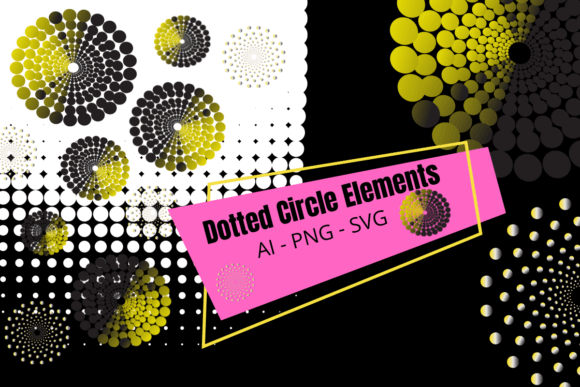
When I opened Dotted Circle Elements, my first thought wasn’t “Oh, another circle set”—it was “This feels like breathing room.” The clean vector construction gives each shape a crisp, intentional rhythm. Not fussy, not overly minimal—just evenly spaced dots tracing perfect or softly irregular circles. It reads as modern but warm, structured but handmade. That balance is rare in free design assets, especially in the Graphics category. As an embroidery designer who’s stitched hundreds of client projects—from baby onesies to boutique aprons—I immediately saw where these could land: not as centerpieces, but as quiet anchors. Think corner accents on a tea towel, subtle framing around monogrammed initials on a sweatshirt, or delicate borders on a nursery pillow cover.
Real-World Stitching: Where Dotted Circle Elements Shines (and Where It Needs Care)
Last week, I used one of the medium-sized dotted circles as a framing element for a custom embroidered tote bag—intended for a local coffee shop’s staff gift line. I placed it just below the shop’s logo, using a soft ecru thread on oat-colored canvas. The result? Clean, legible, and quietly confident. Customers noticed the detail—not because it shouted, but because it *settled* the composition. That’s the strength of Dotted Circle Elements: it supports, rather than competes.
It performs especially well on stable, medium-weight fabrics like cotton twill, linen-blend tea towels, and midweight sweatshirt fleece. On baby embroidery? Yes—but choose the larger variants. Tiny dotted circles risk disappearing on ribbed knit onesies or getting lost in the nap of organic cotton interlock. For caps or curved surfaces, stick to the simplest, most open versions; tight dot spacing + dome-shaped fabric = potential stitch distortion if stabilizer isn’t layered precisely.
Where caution is needed: thin or stretchy fabrics (like lightweight rayon challis), dark backgrounds with light thread (dots can blur without contrast testing), and densely layered garments (think quilted jackets or double-layered aprons). Also, avoid placing smaller elements near high-friction zones—pocket edges, sleeve cuffs, or waistbands—where repeated washing may soften dot definition over time.
What It Adds to Your Handmade Product—and What It Doesn’t
Dotted Circle Elements doesn’t scream “handmade.” Instead, it whispers consistency, care, and intention. That matters—for Etsy sellers listing personalized gifts, small shop owners building brand recognition, or craft fair vendors positioning their work as thoughtful, not just decorative. When customers see that same gentle circular motif across your holiday embroidery collection or your kitchen textile line, it builds visual trust. They begin to associate that rhythm with your aesthetic.
It also elevates perceived value without adding complexity. A satin-stitched monogram looks polished alone—but frame it with a single dotted circle, and suddenly it reads as curated, not generic. Same goes for embroidered patches: use a dotted circle as a subtle outer ring, and it gains dimension without extra digitizing cost.
But let’s be clear—it’s not a standalone hero design. You won’t sell a $45 pillow cover based *only* on a dotted circle. Its power lies in support: as a border, a divider, a background texture beneath lettering, or a repeating motif in a printable mockup for digital product previews. That makes it especially valuable for creative entrepreneurs juggling both physical and digital offerings.
Practical Designer Notes Before You Stitch
- Always test on scrap fabric first—especially if you’re using it on textured or dark materials. Dot clarity depends heavily on thread-to-fabric contrast.
- Review stitch density. Some vector-based embroidery files translate densely when digitized. If your version feels heavy, ask your digitizer to lighten fill areas or switch inner dots to running stitch.
- Confirm hoop size compatibility. While the vectors are scalable, tiny dotted circles may fall below reliable stitch minimums on home machines. When in doubt, go up one size.
- Inspect small details at actual stitch scale. Zoom in on your embroidery software—do the dots hold separation? Do they read as individual marks, or blur into a halo?
- Test black-and-white mockups. This reveals contrast issues faster than color previews. If it fades on grayscale, it’ll likely lack pop on real fabric.
- Use appropriate stabilizer. Tear-away works for stable cottons; cut-away adds security for knits or frequent-wash items like baby embroidery or kitchen towels.
- Verify licensing. Since this is listed under Freebies, confirm whether commercial use—especially for finished products sold on Etsy or in boutiques—is explicitly permitted. Don’t assume.
Final Thought: A Quiet Tool With Real Weight
I don’t reach for Dotted Circle Elements when I need drama. I reach for it when I want cohesion. When a client asks, “How do we make this feel like *us*?”—not trendy, not loud, but unmistakably theirs. It fits naturally into custom apparel, holiday embroidery, nursery decor, and small shop branding because it’s flexible without being forgettable. It’s the kind of design asset that grows more useful the longer you own it—not because it’s flashy, but because it adapts, supports, and stays legible across seasons, stitches, and surfaces. For embroidery designers and craft business owners who value subtlety with substance, Dotted Circle Elements isn’t just another download. It’s a quiet upgrade to how your work holds space.