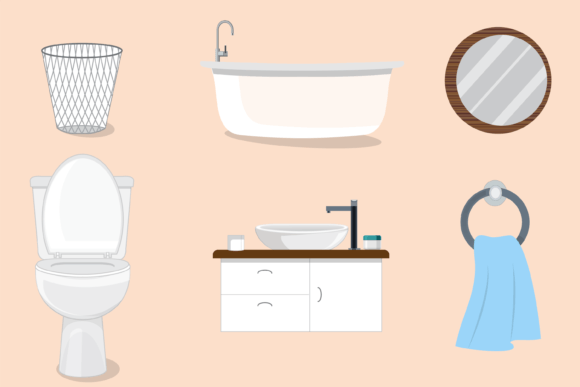
Bathroom Interior Elements Vector: Graphics for Print Templates
First Impression: Warm, Inviting, and Thoughtfully Detailed
When I opened Bathroom Interior Elements Vector, my immediate reaction wasn’t “clipart”—it was “this feels like a mood board come to life.” The illustration balances clean linework with subtle texture, soft shadows, and intentional negative space. It’s not hyper-realistic, but it’s not cartoonish either—landing in that sweet spot of modern design: approachable, lifestyle-oriented, and quietly sophisticated. For a client project—say, a handmade soap brand launching a spa-inspired seasonal collection—it instantly sets tone: calm, curated, and human-centered. That matters more than you’d think when building visual trust.
A Real Project Fit: From Etsy Shop to Local Boutique Launch
I recently used this asset while developing packaging design and social media graphics for a small-batch bath salts line targeting wellness-focused buyers aged 28–45. The Bathroom Interior Elements Vector became the backbone of our hero visuals—not as literal background filler, but as a unifying motif across product mockups, Instagram carousels, and printable thank-you cards. Its cohesive scale and consistent stroke weight meant I could isolate individual elements (a freestanding tub, a ceramic sink, folded towels) and layer them meaningfully without visual competition. That flexibility is rare in generic clipart—and critical for brand identity work where consistency drives recognition.
Where It Shines: Contexts That Elevate, Not Distract
- Product mockups: Placed behind minimalist labels or overlaid with soft opacity, it adds dimension without overwhelming.
- Social media graphics: Works beautifully in Pinterest pins and Instagram Stories—especially when paired with light sans serif fonts and muted palettes.
- Printable design: As part of a themed collection (e.g., “Self-Care Kit” wall art or shower-themed greeting cards), its vector scalability ensures crisp output at any size.
- Cricut projects & sublimation design: Clean paths and well-organized layers make cutting and heat-transfer prep efficient—even for non-designer crafters.
- Canva templates & digital ads: Functions as a decorative accent in hero sections or as a subtle border element in editorial design layouts.
Where to Proceed With Intention
This isn’t a one-size-fits-all graphic design asset. Its warmth and detail mean it doesn’t vanish into the background—and that’s both its strength and limitation. Avoid using Bathroom Interior Elements Vector in contexts demanding stark minimalism (think corporate healthcare branding or high-end luxury cosmetics), low-contrast environments (e.g., light grey on white), or tight spaces like tiny sticker designs under 1.5 inches. It also competes visually with busy patterns or dense typography—so prioritize breathing room. If your client’s brand voice leans clinical, tech-forward, or ultra-modern, this illustration may soften the message unintentionally.
Impact on Core Design Principles
In practice, Bathroom Interior Elements Vector strengthens emotional appeal and audience engagement by grounding abstract concepts—like “relaxation” or “ritual”—in tangible, relatable visuals. It supports visual hierarchy when used intentionally: larger elements anchor composition; smaller ones (like a potted fern or rolled washcloth) add narrative depth. But it can weaken readability if placed beneath body copy without sufficient contrast or blur treatment. And crucially—it reinforces brand consistency *only* when aligned with supporting assets: pair it with script fonts for artisanal charm, or clean sans serifs for contemporary clarity. Mismatched typography will undermine its professional effect.
Designer Notes: What to Test Before Client Delivery
- Preview in black and white—does the silhouette hold? Does it retain legibility on dark backgrounds?
- Scale it down to 0.5 inches wide—do details like faucet handles or tile grout lines collapse or become muddy?
- Drop it onto 3 real product mockups (e.g., soap box, tote bag, mug)—does it feel integrated, or pasted-on?
- Check file formats: Is the SVG truly editable (unlocked layers, no raster embeds)? Are PNGs delivered with alpha transparency?
- Test print quality on both matte and glossy stock—some vector-to-print conversions exaggerate line weight or soften edges.
- Confirm commercial license terms—especially for print-on-demand sellers and Etsy product listings where licensing compliance is non-negotiable.
Final Verdict: A Strategic Creative Asset, Not Just Decorative Clipart
Bathroom Interior Elements Vector isn’t just another download—it’s a deliberate creative design choice. When matched to the right client (handmade business, boutique wellness brand, seasonal campaign, local event promo), it delivers cohesion, warmth, and visual storytelling that stock photos often miss. As a graphics asset for print templates, it bridges digital and physical seamlessly—supporting everything from t-shirt design to packaging design to web design visuals. But its value hinges on intentionality: use it where mood matters, where craftsmanship is visible, and where your audience connects with authenticity over austerity. For designers who treat every asset as part of a larger brand ecosystem—not just decoration—it earns its place in the toolkit.