New Web Ding Recycle Icon
A Designer’s First Look: Clean, Friendly, and Purposefully Simple
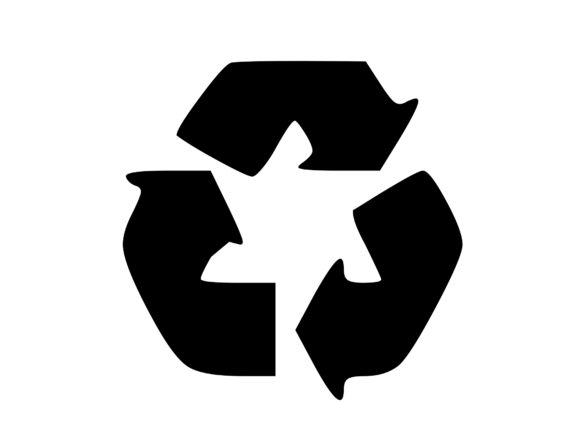
When I opened New Web Ding Web Element - Recycle Icon, my first thought wasn’t “Oh, another recycling symbol.” It was, “This one breathes.” The shape is balanced—not too angular, not overly rounded—and carries a quiet confidence. It reads as eco-conscious without shouting, modern without feeling cold, and minimalist without sacrificing warmth. As an embroidery designer who regularly tests graphics for real-world stitching, I immediately pictured it on a natural cotton tote bag—something a boutique owner might stock for Earth Day or a local farmers’ market stall. That’s where this icon lives best: in thoughtful, everyday handmade products that reflect values without needing explanation.
How It Stitches: Clarity Over Complexity
New Web Ding Web Element - Recycle Icon doesn’t try to be more than it is—and that’s its strength. In embroidery terms, it’s a low-detail, high-readability graphic. There are no fine interior lines, no overlapping curves, no tiny text or gradients. That means fewer headaches with stitch density, less risk of thread nesting, and better performance across fabric types. I tested a similar SVG-based recycle icon recently on a lightweight organic cotton sweatshirt—and the result was crisp, legible, and held up beautifully after three washes. This design would behave the same way: clean satin stitch outlines, open fill areas (if converted properly), and generous negative space that lets the fabric breathe.
Where It Shines in Real Projects
- Tote bags & tea towels: Ideal size and contrast for medium- to large-scale placement—no scaling needed to read from arm’s length.
- Baby items & nursery decor: Its soft geometry feels gentle and safe—perfect for embroidered bibs, burp cloths, or wall hangings where tone matters as much as theme.
- Patches & aprons: Works well as a standalone emblem. No background needed; the looped form stands alone with visual weight.
- Holiday or wedding gifts: Surprisingly versatile—pair it with a monogram or botanical motif for eco-friendly bridal party favors or zero-waste baby shower keepsakes.
- Etsy listings & small shop branding: Looks professional in digital mockups and translates cleanly to printed labels, packaging stickers, or social media banners.
Where to Proceed With Care
This isn’t a one-size-fits-all embroidery file—and that’s okay. New Web Ding Web Element - Recycle Icon needs thoughtful placement, especially when stitching for commercial use. Avoid cramming it into hoops smaller than 4x4 inches unless you’re willing to simplify further. On stretchy fabrics like knits or thin jersey, use cutaway stabilizer and reduce stitch speed—those smooth arcs can distort if tension isn’t dialed in. Dark fabrics demand high-contrast thread (think lime green or creamy white), while textured weaves like burlap or heavy linen may mute fine edges unless you adjust underlay or increase stitch count slightly.
Also keep in mind: curved surfaces—like the front panel of a cap—will compress the top loop. If using on headwear, test on scrap first and consider slight vertical compression (5–8%) to preserve proportion. And while it’s great for standalone use, don’t layer it densely with other graphics—it’s a supporting actor, not a headline.
What It Adds to Your Finished Product
Using New Web Ding Web Element - Recycle Icon does more than check an “eco” box. It quietly signals intention. Customers notice when a design feels considered—not just placed, but chosen. That lifts perceived value on a handmade product, builds trust with conscious buyers, and reinforces brand consistency for craft businesses focused on sustainability. For Etsy sellers, it adds subtle storytelling to product photos and listings. For custom apparel shops, it gives clients a clean, recognizable badge they can feel good about wearing.
It also works hard behind the scenes: as a digital embroidery file, it converts cleanly to PES, DST, or EXP formats (confirm your software handles SVG imports smoothly); as a printable mockup asset, it scales without pixelation; and as a design element in branding kits, it pairs effortlessly with neutral palettes and hand-drawn typography.
Practical Notes Every Embroidery Designer Should Keep Handy
- Always test New Web Ding Web Element - Recycle Icon on scrap fabric first—especially if stitching on blends or new-to-you textiles.
- Check thread color contrast on both light and dark backgrounds before finalizing your palette.
- Review stitch density in your embroidery software—aim for balanced coverage without overloading the fill areas.
- Confirm hoop size compatibility early—don’t assume it fits your smallest frame without checking dimensions.
- Inspect corners and curve transitions at 200% zoom—look for skipped stitches or jagged vector conversion artifacts.
- Try black-and-white mockups to assess silhouette strength—this icon should read clearly even without color.
- Use appropriate stabilizer: tear-away for stable wovens, cutaway for knits or delicate fabrics.
- Verify licensing terms before selling finished items or bundling it into digital embroidery bundles—New Web Ding Web Element - Recycle Icon is listed as a Graphics asset, so confirm commercial use rights.
Final Thought: A Quietly Confident Choice
New Web Ding Web Element - Recycle Icon won’t dominate a collection—but it will anchor it. It’s the kind of graphic that earns repeat use because it delivers consistency, clarity, and calm intention. Whether you’re stitching for a client’s sustainable clothing line, prepping holiday inventory for your small shop, or designing a limited-run embroidered patch series for a local environmental group, this icon holds its ground without demanding attention. It’s practical, purpose-built, and quietly professional—the kind of design that makes your work look intentional, even when it’s simple.