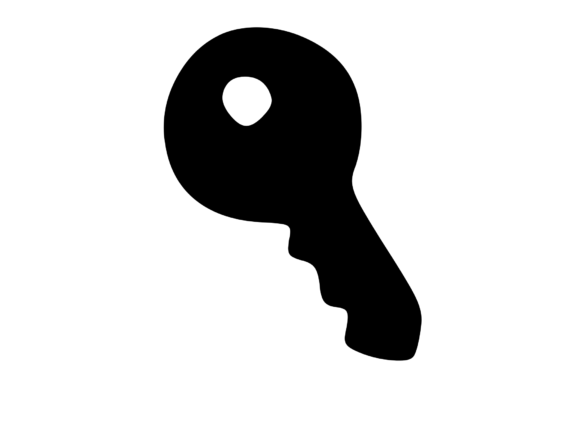
New UI Web Ding Key Icon: Graphics & Crafts Asset
First Impression: A Playful, Hand-Crafted Spark
Opening the New UI Web Ding Web Element Key Icon for the first time, I felt an immediate lift—like spotting a well-placed charm on a handmade greeting card. It’s not sleek or sterile; it leans into gentle asymmetry, soft curves, and subtle texture that reads as digitally rendered but warmly human. This isn’t a corporate lock icon—it’s a *key* with personality: slightly rounded corners, a delicate bow-like top loop, and a faint inner stroke that adds depth without clutter. The mood is approachable, trustworthy, and quietly confident—ideal for a client project centered around small-batch goods, local storytelling, or artisanal branding.
Fits Like a Glove for Handmade Business Branding
I recently reviewed this asset while developing visual assets for “Hearth & Thread,” a new Etsy shop launching hand-poured soy candles and embroidered linen sachets. Their brand voice is warm, grounded, and intentionally imperfect—think linen textures, oat-colored palettes, and serif + script font pairings. The New UI Web Ding Web Element Key Icon slotted in perfectly as a decorative motif: reinforcing the idea of “unlocking comfort,” “opening moments of calm,” or even “key ingredients” in product descriptions. It worked seamlessly across packaging design (embossed on kraft labels), social media graphics (as a corner accent in Instagram carousels), and printable design elements (included in a free downloadable gift guide PDF).
Where It Shines: Real-World Design Applications
- Product mockups: Scales beautifully on t-shirt design previews, mug renders, and tote bag mockups—especially when placed near product names or care instructions.
- Cricut projects: Clean SVG paths mean crisp cuts on vinyl and iron-on transfers; tested successfully at 1.5” and 4” sizes on both smooth and textured substrates.
- Print-on-demand assets: Works reliably in sublimation design layouts—no anti-aliasing artifacts, no stray pixels, and excellent edge definition.
- Canva templates: Functions as a versatile drag-and-drop graphic in branded newsletter headers, Pinterest pin banners, and digital workshop invitations.
- Editorial and blog visuals: Adds visual rhythm to listicles (“5 Keys to Sustainable Crafting”) or seasonal campaign posts (“Unlock Spring With Our New Collection”).
Where to Use It Thoughtfully
This isn’t a one-size-fits-all graphic design asset. Its expressive character means it needs breathing room. Avoid placing the New UI Web Ding Web Element Key Icon in ultra-minimalist logo design contexts—it competes with clean typography rather than supporting it. It also loses clarity below 16px in web design, so skip using it as a tiny favicon or inline navigation icon. On complex backgrounds—busy patterns, photo overlays, or gradient meshes—it can visually recede unless given a subtle drop shadow or solid background shape. And while it enhances emotional appeal for handmade business audiences, it feels out of place in formal corporate marketing visuals or B2B SaaS dashboards where neutrality and precision dominate.
Design Impact: More Than Just Decoration
When used intentionally, the New UI Web Ding Web Element Key Icon strengthens visual hierarchy—not by shouting, but by guiding the eye with intention. In a hero section for a craft fair landing page, it anchors a headline like “Your Creative Journey Starts Here.” Paired with a display font, it creates instant recognition and warmth. Tested across devices, it maintained readability and brand consistency in both light-mode and dark-mode interfaces. Most importantly, it elevated perceived professionalism—not through sterility, but through thoughtful execution. Clients notice when details feel considered, not generic.
Practical Designer Notes Before Client Deployment
- Test it in black and white—verify legibility and silhouette integrity without color reliance.
- Check contrast on both light and dark backgrounds; its mid-tone weight performs best against high-contrast backdrops.
- Preview at intended use sizes: 24px for web buttons, 1.75” for sticker design, 6” for printable wall art.
- Place it on real product mockups—not just flat previews—to assess proportion and presence.
- Confirm print quality: run a test print on uncoated paper and glossy stock to evaluate ink spread and fine-line fidelity.
- Inspect file formats: the SVG is fully editable (layers intact, no raster flattening); included PNGs have alpha transparency with zero fringing.
- Compare with typography: it pairs strongly with rounded sans serifs (e.g., Quicksand), friendly scripts (e.g., Pacifico), and earthy serifs (e.g., Cormorant Garamond)—but clashes with ultra-thin or geometric display fonts.
- Verify commercial license terms—this is a commercial design asset, but always cross-check permitted uses (e.g., unlimited end products, resale in Canva templates, inclusion in design bundles).
A Strategic Addition to Your Creative Marketplace Toolkit
The New UI Web Ding Web Element Key Icon isn’t just clipart—it’s a functional, emotionally resonant piece of creative design. For designers building brand identity for Etsy sellers, crafting packaging design for local makers, or assembling social media graphics for seasonal campaigns, it delivers polish without pretense. It bridges the gap between digital precision and handmade authenticity—a rare balance in today’s crowded creative marketplace. When your client needs to stand out—not with noise, but with nuance—this key icon opens more than doors. It invites attention, signals care, and quietly says, “This was made with thought.” That’s the kind of detail that turns a good design into a trusted brand experience.